
How to setup your vacuum table
06 Nov
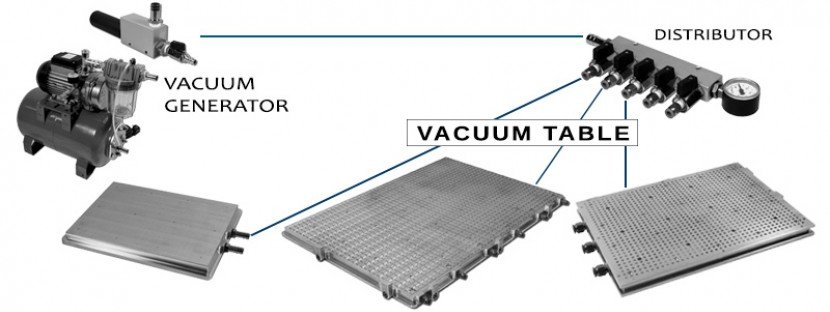
Although this may vary depending on your setup, the steps below provide a practical guide to get you up and running quickly.
If you have a specific question not answered here, contact us or speak to us on live chat.
R Series
- Secure the vacuum table to your T-slot or adapter plate using clamps that grip the perimeter lip.
- Connect the supplied hose from the table to your vacuum source.
- Remove the required grub screws from the table surface.
- Lay the rubber cord to form a continuous seal around your workpiece.
- Optional: Use the PVC mat for break-through milling to help protect the table surface.
- Place the workpiece on the table and switch on the vacuum.
RAL Series
- Secure the vacuum table to your machine T-slot using clamps that grip the perimeter lip.
- Connect the vacuum table outlet to the manifold.
- Using the supplied hose, connect the manifold to the Venturi.
- Connect the Venturi to your compressor.
- Remove one or more grub screws (depending on your workpiece size).
- Lay the rubber cord to create a seal around the part.
- Place the part on the table.
- Switch on the compressor, then open the manifold and Venturi valves.
RAL Pro Series
- Secure the vacuum table to your machine T-slot using clamps that grip the perimeter lip.
- With the integrated Venturi and manifold, connect the Venturi to your vacuum generator.
- Remove one or more grub screws (depending on your workpiece size).
- Lay the rubber cord to create a seal around the part.
- Place the part on the table.
SEAL & ST Series
- ST Series: Fix to your T-slot plate using the perimeter mounting holes and screws.
- SEAL Series: Screw the adaptor plate to your T-slot plate, seat the table into the adaptor, then secure using the perimeter screws.
- Insert the supplied hose into the vacuum table ports on the side.
- If using a vacuum cleaner, attach the adapter and connect the hose from your vacuum table.
- Place the supplied holed rubber mat on the table surface, covering as much area as possible.
- Place the workpiece on the table and switch on the vacuum.
Tip: For small workpieces, minimize leakage around the part.
Seal any open areas around the workpiece using adhesive tape or stretch foil.
The video below shows one approach.